
Logistics CRM
While freight requests arrive through three channels at once, the price is given each time from a figure in one person's memory; that is why two different quotes can go out for the same route.
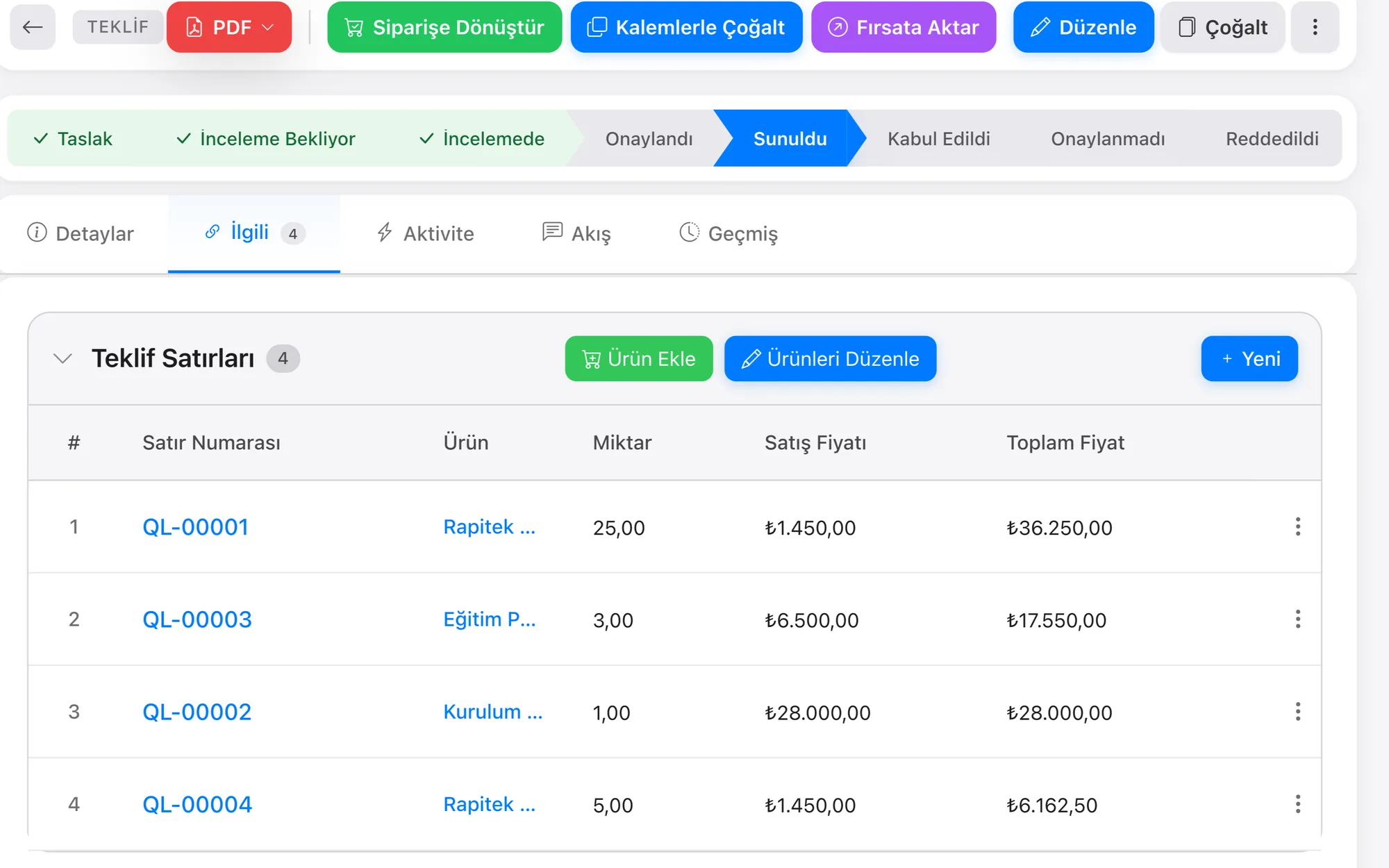
Route, tonnage and vehicle type are fields on the quote line; the price comes from a predefined list. Each incoming request lands in the same pool as a record, along with its channel.
What we set up, and how
- Collect and manage requests coming from e-mail, telephone and the website in a single request pool
- Keep route, tonnage and vehicle type in the fields of the quote line; have the unit price calculated from a predefined price list
- Split your customer portfolio into segments and identify your most profitable customers
- Track and report service level commitments on a per-customer basis
- Collect incoming WhatsApp conversations on a single business number and distribute them within the team according to the rule you define
| Request Management Centre | Requests coming from e-mail, telephone and the website land in the same pool as records; because the source is written in its field, what each channel brought is visible in the report. |
|---|---|
| Route-Based Pricing | Route, tonnage and vehicle type are fields on the quote line; the price comes from a predefined list, so no manual calculation is made for each quote. |
| Customer Portfolio Analysis | Segment is a field on the account record; because revenue and trip count accumulate under the card, the most profitable customers are ranked in the report. |
| Service Level Tracking | The delivery time you promised your customer is a field on the record; it is compared with the dates of the trip records and delays are collected in the report. |
| Delivery Confirmation and Signature Record | Who the load was delivered to and at what time sit in the fields of the trip record; the person receiving it signs on the signature screen in the mobile app, and that the delivery was made at the right point is confirmed by location verification. |
In logistics the speed of the quote is a competitive item in its own right: the customer with a load asks several firms for a price within the same hour and goes with the first one to come back. If the calculation sits with the single person in operations, a request that arrives while that person is on the road waits for hours.
In Rapitek CRM the price tables are defined in the system; the quote goes out even when the person who knows the calculation is not at their desk, and every quote that goes out sticks to the record of the request it belongs to. Because won and lost jobs accumulate in the same place, which customer actually leaves a profit, and whether the service commitments given to the customer were kept, are discussed at the end of the period with records rather than guesswork.
Other industry pages in the same area: Haulage and Transport CRM · Home Removals CRM · Warehouse CRM · Courier CRM · Fleet Management CRM · Maritime CRM
