
Pet Grooming CRM
How short a dog is clipped, which shampoo it reacts to and how it behaves on the table are all in an employee's head. When that person leaves, the customer has to explain everything from the beginning.
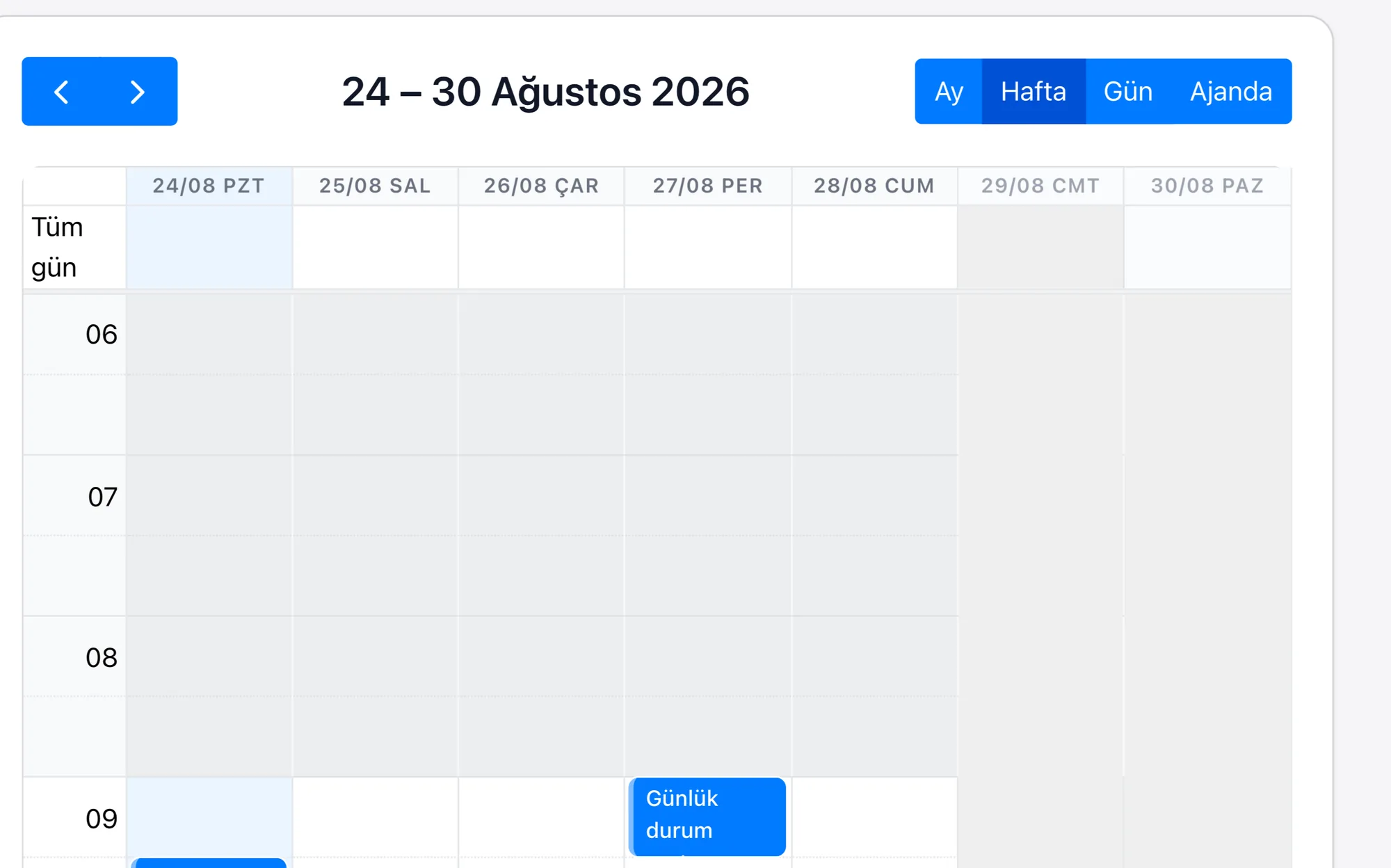
The species, breed, allergies and clipping preference sit on the animal's own record; because the treatment time is defined by coat type, the calendar fills by real workload, not by queue.
What we set up, and how
- Keep a separate profile card for every animal, with the species, breed, allergies and grooming preferences
- Take appointments online, assign the job to a suitable groomer and balance the load through the day
- Record the details of every visit and leave the note for the next grooming on the same card
- Keep the grooming period and the last visit date in a field; let those whose period is up drop into a list and tie the reminder to that list with a rule
- Send appointment confirmations, grooming-completed notifications and reminders over WhatsApp
| Animal Profile Cards | Every animal is a separate record attached to its owner; the species, the breed, the allergies and the grooming preference sit in its fields. |
|---|---|
| Treatment Duration by Coat Type | The treatment duration is a field defined on the service record according to the animal's breed and coat type; the slot opened on the calendar is produced from that duration, and a short-haired cat and a long-haired dog cannot be booked into the same slot. |
| Grooming History Tracking | The note from every visit builds up with a date under the animal's card; at the next grooming it is read from that same card. |
| Periodic Reminders | The grooming period is a field; those whose period is up according to the last visit date drop into a list and a reminder task is opened. |
| Vaccination Date Check | The date of the last rabies and combination vaccination is a field on the animal record; animals whose date has passed are flagged on the appointment list, and asking the owner for the document is opened as a task from that flag. |
A pet groomer's income does not come from a single visit but from the interval between visits staying regular: when the same dog comes every six weeks the calendar is full all year, and when two months are missed, Saturday stays empty. The second breaking point is time: the job for a short-haired cat and the job for a long-haired dog do not fit into the same slot, and when appointments are given by queue rather than by duration, the schedule falls apart in the middle of the day.
In Rapitek CRM the appointment duration and the price are defined separately according to the animal's species and the treatment to be carried out; the calendar then fills by real workload. Because past visit intervals are recorded, animals whose period is up drop into a list, and the reminder is not a general message going to everyone but one produced from that animal's own grooming period.
