
Home Removals CRM
In home removals the date rarely stays as it was first discussed: the deed is delayed, the painting is not finished, the job slips by a week. Every date that slips leaves that day's crew idle; and when the belongings wait a few days in storage, who pays how much storage is argued after the move is over.
A booking is a record with date and deposit fields; when the date changes, the previous value stays in the history. The inventory of belongings is tied to the same job as photographed lines.
- Record the booking with the deposit amount and the confirmed date; when the date changes, let the old and the new date both leave a trace on the same record
- Add the pre-loading inventory of belongings to the record with its photographs and answer a damage claim on the basis of a dated record
- Track the entry and exit dates and the number of waiting days for belongings that go into interim storage, and draw the storage charge from the record
- Record the outcome of the quotes you gave and measure at which price range, and after how delayed a reply, you lost the job
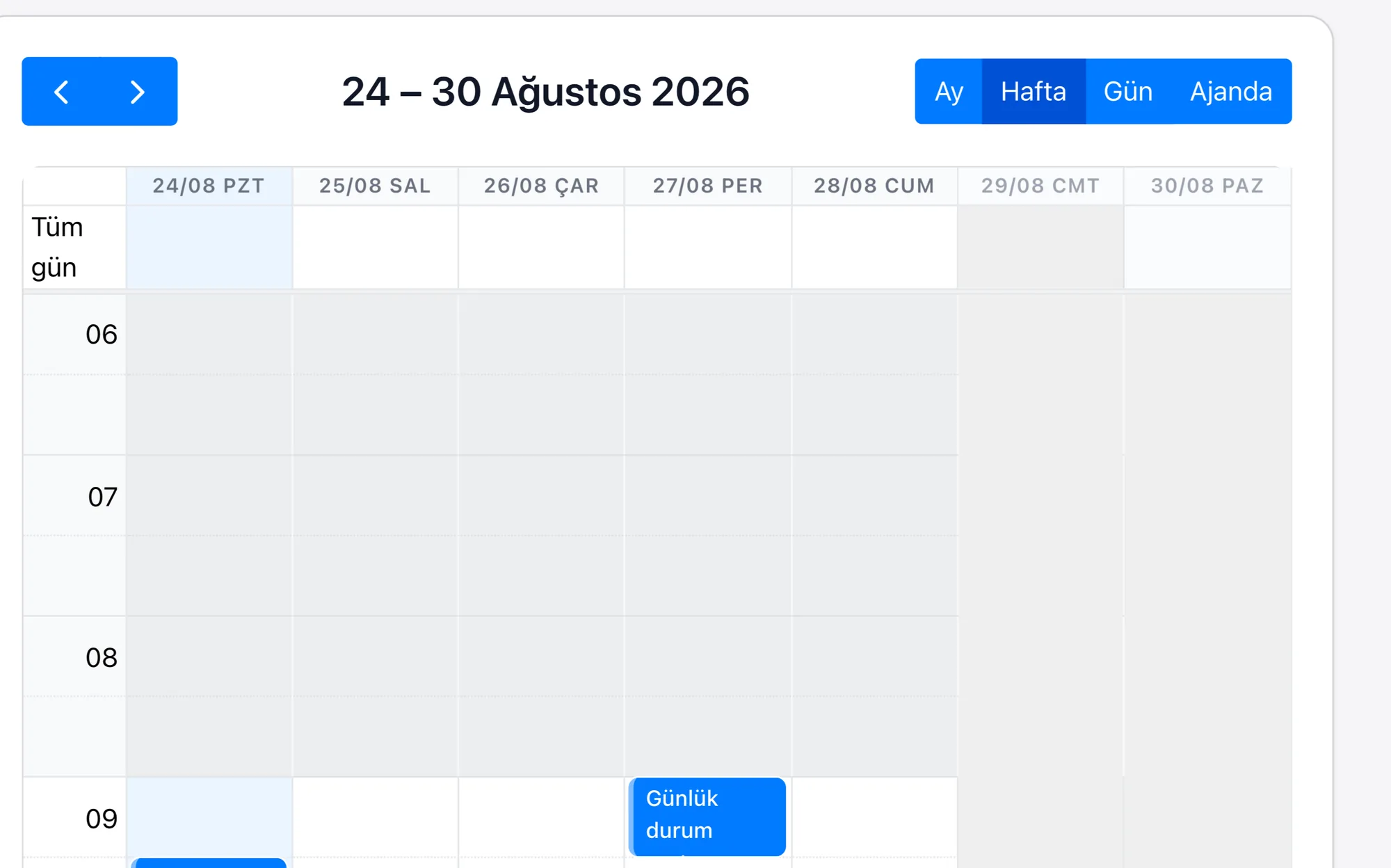
| Booking Record | A booking is a record with date and deposit fields; when the date changes, the previous value stays in the record history, and the calendar is set to the new date. |
|---|---|
| Inventory of Belongings | The inventory is a set of lines tied to the job record; each line has a condition note and a photograph attachment, and its state before loading is kept with its date. |
| Damage File | A damage claim is a request record tied to the job; it is matched with the inventory line, and the resolution step and the amount paid sit on the same record. |
| Storage Tracking | The entry and exit dates for storage are fields on the record; the number of waiting days is calculated from those two fields, and the charge line is produced from there. |
In this business the customer is one-off but the job is in many pieces: the booking is taken, the deposit is paid, the date changes, some of the belongings go into storage, and on the way out someone says a wardrobe was scratched. When these pieces are kept in different places — the deposit in a diary, the date change in messages, the damage claim in what the crew says — the firm has to answer according to what the customer recounts rather than to its own record.
Rapitek CRM opens the booking as a single record; the deposit, the date change and the entry to and exit from storage all leave a trace on that same record. Because the photographs of the belongings taken before loading are also added to that record, when a damage claim arrives what is discussed is not memory but a dated attachment. Because jobs that were quoted and lost sit in the same list, at which price range and after how late a reply the job was lost becomes measurable.
The scope of the plans and the separately priced items are written on the pricing page.
