
Theme Park CRM
What a theme park manages is not the crowd at the gate but the promises made in advance for that day: a school trip, a company picnic, an agency group and a private-day hire all fall on the same date. When the promises are given over the phone and written onto separate lists, nobody has any hold on how many people to expect at the gate that morning.
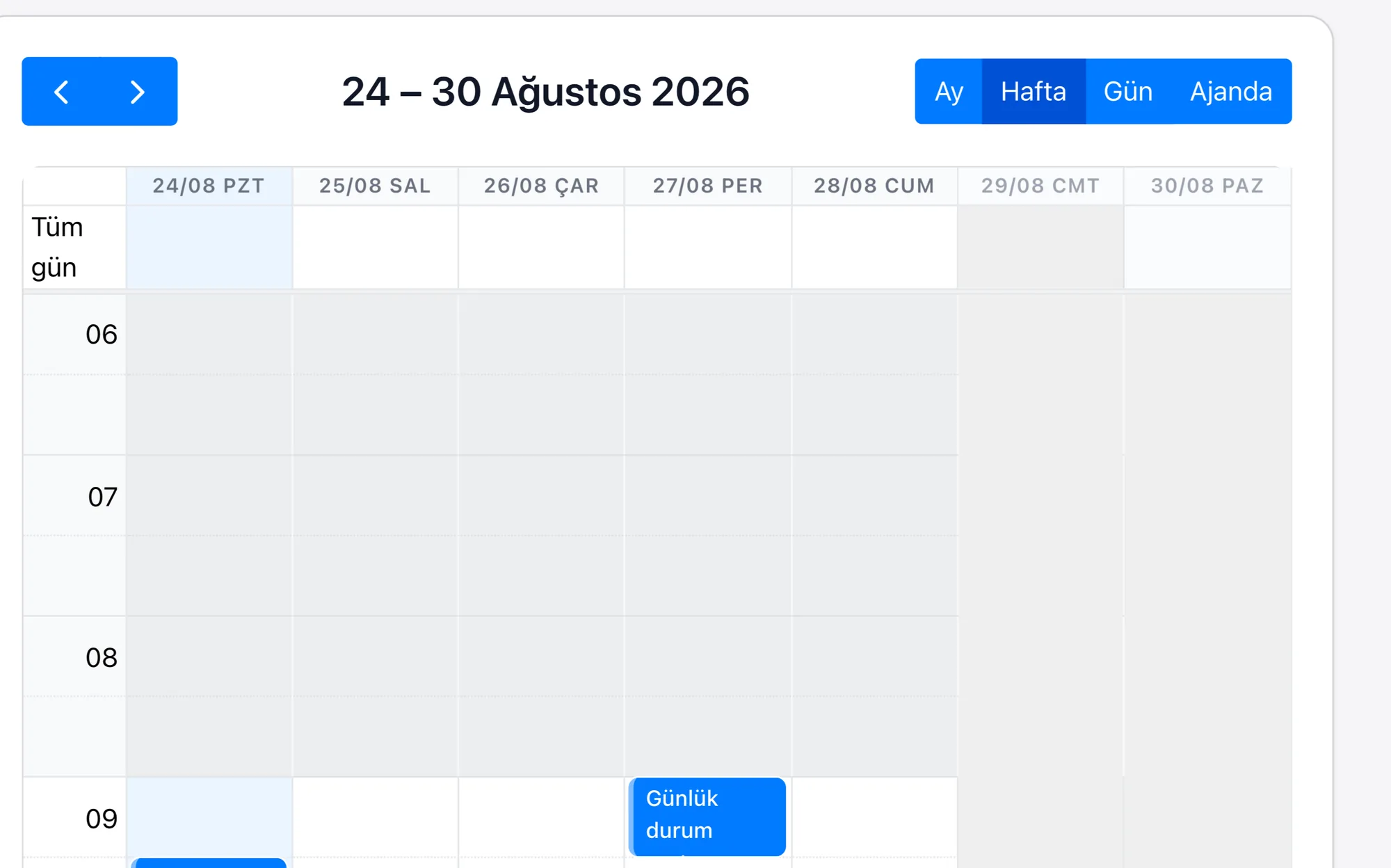
Every group booking is a record with visit date and headcount fields; those opened for the same day gather on one list, and the day's expected headcount is read from the total.
What we set up, and how
- Gather school, company and agency group bookings on a single calendar with date, headcount and agreed price fields
- See the bookings falling on the same day together and draw the staffing, catering and car park plan from that list
- Track the end dates of season passes and corporate allocation agreements; a flow can send an automatic email or approved WhatsApp template message a set number of days before the end date
- Send the post-visit satisfaction survey from the record, tie an incoming complaint to a request record and assign it to the person responsible
| Group Entry Booking | A booking is a record; the visit date, the headcount, the agreed entry price and the payment status sit in its fields, and which group is coming to the gate is known from this record. |
|---|---|
| Corporate Account | The school, the company and the agency are each an account record; the allocation agreement and the special price are in a field on the account and come to the booking from there. |
| Daily Capacity | Bookings opened for the same date gather on a single list from the date field; the day's expected headcount is the total of that list. |
| Season Pass | A pass is a record carrying an end date and is linked to its holder's person record; those nearing their end drop into a list, and the renewal task is opened from there. |
| Post-Visit Feedback | The survey is sent from the visit record; an incoming complaint turns into a request record, and the person responsible is determined by the assignment rule defined at setup. |
A theme park's selling is not done at the ticket window but months earlier on the phone and by email: a school asks about dates for three classes, a company wants capacity for a picnic day, an agency negotiates an allocation across the season, a family hires an area for a birthday. When each one is discussed with a different person and written onto a different list, the total of the commitments falling on the same day is visible nowhere; the crowd is measured at the gate in the morning, and by that point the staffing, catering and car park plan can no longer be changed.
In Rapitek CRM every group booking is a record: the visit date, the headcount, the agreed price and the payment status are its fields, and because bookings opened for the same date gather on a single list, the day's expected headcount is read from that list. Because the school, the company and the agency are each an account record, the allocation agreement and the special price sit in a field on the account and a new booking takes its price from there; a season pass is likewise a record carrying an end date, and those nearing renewal drop into a list. The post-visit satisfaction survey is sent from the same record, an incoming complaint turns into a request record, and the person responsible is determined by the assignment rule defined at setup.
The scope of the plans and the separately priced items are written on the pricing page.
