
Skip to content

Theater CRM

In a theater, revenue comes from three separate places: the single-ticket theatergoer, the season subscriber, and the school or company that takes the whole house. When the subscription renewal period and group requests from touring cities fall in the same week, a breakdown shows up anywhere the lists are kept apart.

The subscription end date is a field on the person record; a group booking moves through request, hold, deposit and confirmed stages, and expired holds show on the list.
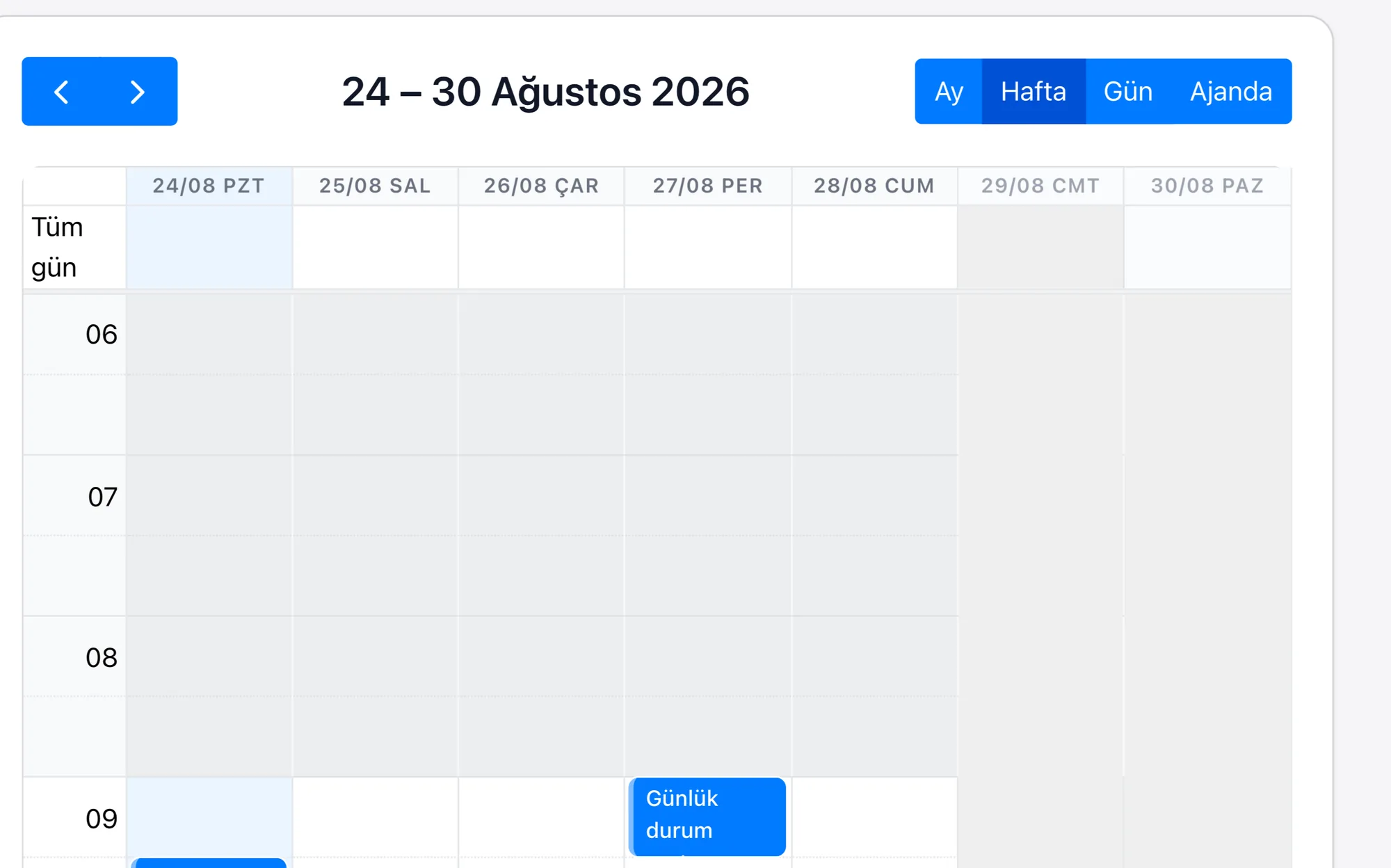
Theater CRM
  • Keep the season subscription's end date as a field and call subscribers entering the renewal period from a single list
  • Run school and company group bookings through request, hold, deposit and confirmed stages
  • Build up on each theatergoer's record which play they saw and when, and split the new production announcement by that history
  • Track venue conversations in tour cities, technical requirements and the revenue-share terms on a single record
Season SubscriptionA subscription is a record linked to the person record; the package, the start date and the end date are in fields, and those nearing their end drop into the renewal list.
Group Seat HoldA school or company request is a record with request, hold, deposit and confirmed stages; the seat count, the performance date and the deposit status are in its fields, and blocked seats whose hold period has expired appear on the list.
Audience HistoryEvery play seen is a line under the person record; the announcement list is filtered on the genre and the date in that history.
Tour and VenueThe tour city and the venue are each a field; the technical requirements and the revenue-share terms sit on the same record and are compared with the previous season.

In theater, the relationship with the audience does not squeeze into a single box-office transaction. A season subscriber remembers which plays they saw last year and expects the renewal call to reflect that; a school asks for a matinee for two hundred students, and the teacher's name, the coach time and the deposit payment are all discussed inside the same conversation; a sponsoring company takes the whole house for a private performance. The box-office system does not hold these three relationships, because the box office counts tickets. And when the company goes on tour, what was discussed with the venue manager in that city, the technical requirements and the revenue-share terms all stay in one person's inbox.

In Rapitek CRM the theatergoer is a person record and the school or company is an account record; which play they saw and when builds up under that record. Because the subscription end date is a field, subscribers entering the renewal period drop into a list and the call turns into a task. A group booking is a record with its own stages: request, hold, deposit and confirmed are separate steps; the seat count and the performance date sit in fields, and those whose hold period has expired appear on a separate list. The tour city and the venue are fields too, and the terms agreed with that venue stay on the same record. The announcement of a new production goes out from the same system over SMS and WhatsApp; who received which message leaves a trace on the card.

The scope of the plans and the separately priced items are written on the pricing page.

Frequently asked questions

Does the system remind us of theatergoers whose season subscription is about to end?
The subscription end date is a field on the record; subscriptions falling within the number of days you set are gathered on a separate list, and a renewal call is opened as a task for each one. The announcement going to the subscriber is also sent by SMS or WhatsApp from the same list.
How do you track the deposit and the confirmation on school group bookings?
A group booking is a record that moves through request, hold, deposit received and confirmed stages. The seat count, the performance date and the teacher's contact details sit in fields; because bookings whose hold period has expired appear on the list, seats are not left blocked for nothing.
Can we send a new production announcement only to the relevant theatergoers?
Yes. Every play seen is a line under the person record; the announcement list is filtered on the genre and the date in that history, the message goes out by SMS or WhatsApp from the same list, and who received which message leaves a trace on the card.
Which is the best CRM software for a Theater?
When choosing a CRM for the Theater sector, you should pay attention to sector workflows, integration capabilities, customisation options and support quality. You do not set up Rapitek CRM, we do: we configure the fields, the stages and the reports to fit your theater process, we migrate your data, and we give your team training in Turkish. Before building our own platform, our team completed more than 200 enterprise CRM projects during its Salesforce years; we do the setup with that experience.
How much does a Theater CRM system cost?
We keep the current plan prices in one place and publish them openly on our pricing page; we do not put figures on this page so that you never read a different price in two places. The price is set by the number of users and the plan chosen. The scope of setup, data migration and training is not the same on every project; the scope and the setup fee, if any, are worked out together at the discovery meeting and shared in writing. The Rapi artificial intelligence credit and ERP integration are separately priced items.
How are CRM integrations done in the Theater sector?
If you use Logo, Netsis, Mikro or SAP, your CRM talks to it — we build the connection ourselves. There is no out-of-the-box module: because the access and field structure on the ERP side differs from one installation to the next, a single button does not work the same way everywhere. The connection is set up specifically for your project over our REST API covering 183 business objects, OAuth2, webhooks and import/export. We work out its scope and cost at the discovery meeting and share them in writing.
How does the move to a CRM system work in the Theater sector?
We start with a discovery meeting: we work out your theater process together, and which fields and which stages are needed. After the meeting we give you a date, not a range. We migrate your data ourselves and we give your team training in Turkish. There is no call centre on our support line. Your question is answered by the team that builds and develops the product — this is a choice, not a matter of capacity.
Can mobile CRM be used for a Theater?
Yes. Field and branch teams can update the customer record, notes and follow-up tasks from their phone. The app is live on both the App Store and Google Play. The web interface works on tablets and phones as well. The app does not work offline; if the connection drops while you are filling in a form, what you have written is kept on the device for 24 hours.
Made with RapitekGO

We would like to use optional cookies to measure your visit. The site works exactly the same if you decline. Cookie policy