
Wedding and Event Planning CRM
Planning a wedding takes 6-18 months and carries more than 50 touchpoints; when the milestones sit in a calendar, the supplier approvals in email and the couple's question on somebody's personal phone, the last two weeks turn into a crisis.
Every wedding is a single record carrying its own dates and assigned suppliers; from bridal preparation to the band, the hour-by-hour run sheet is lines linked to that record.
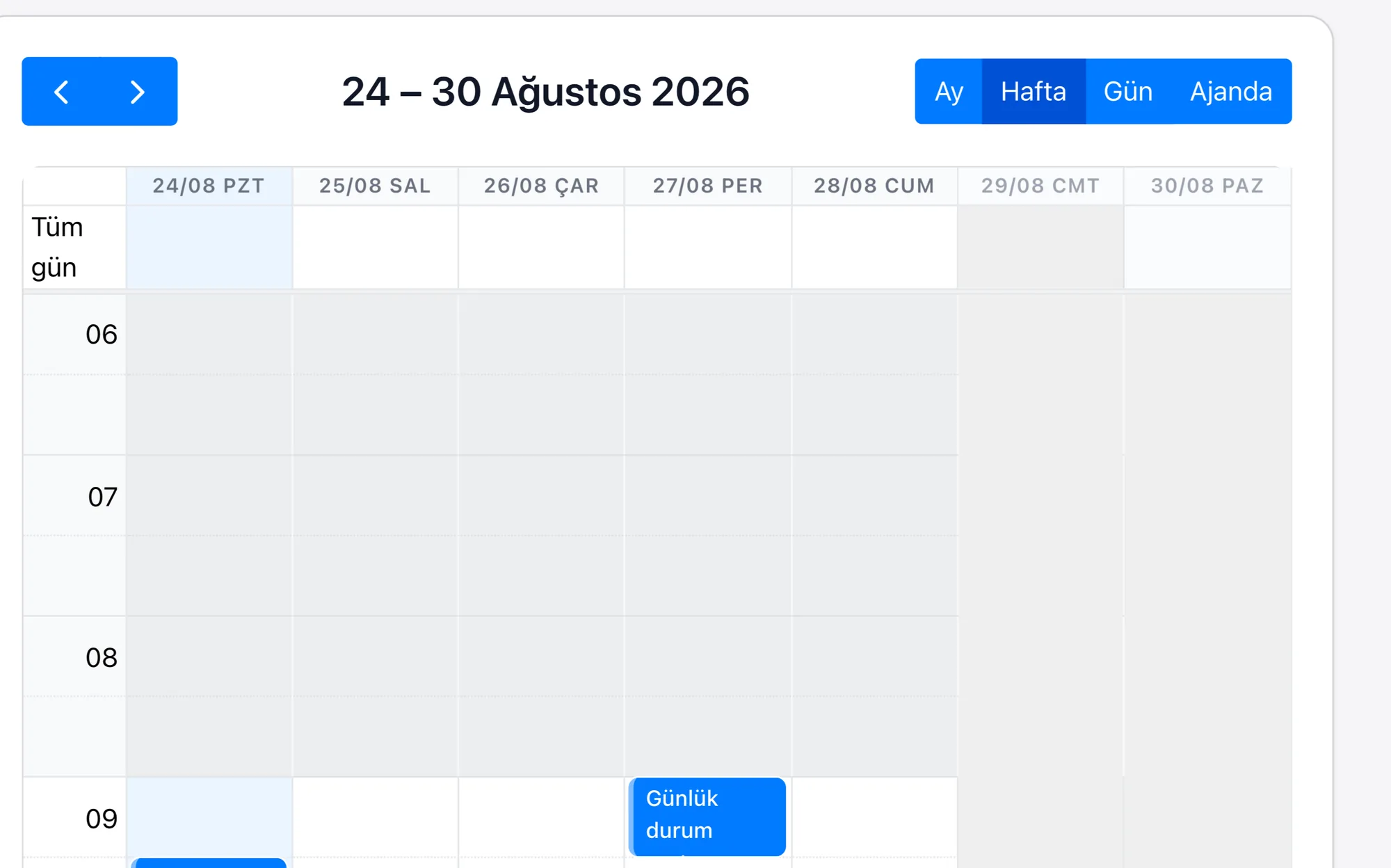
- Keep the proposal's sending and validity dates on the opportunity record; let those past their term appear in a list, and open the call task from that list
- Link every milestone of the plan to a dated task; attach a rule so that a notice goes to the couple and to the supplier concerned
- Bring close to twenty suppliers together on a single platform; track deadlines and approval flows from the supplier card
- Attach a rule so that the satisfaction and referral request task is opened when the event closes
- Let the whole team answer from a single business number, have conversations assigned by rule, and let the manager see response times
| Tracking From Proposal To Contract | The proposal's sending date and validity date are fields on the opportunity record; proposals past their term appear in a list, the follow-up task is opened from that list, and how many couples are waiting at which stage is read from the stage report. |
|---|---|
| 12-Month Timeline | Every milestone is a dated task linked to the wedding record; tasks whose date is approaching appear in a list, and you can attach a rule to that list so that a notice goes to the couple and to the supplier concerned. |
| Supplier Coordination | Every supplier is an account record; contact details, price and performance notes sit in the fields of that account. Assignment per wedding and the deadline are lines linked to the wedding record, and a line whose approval is overdue stays open on the list. |
| Post-Event Referral Request | When the event closes, a satisfaction survey and a referral request are opened as tasks; on the incoming couple's record, the source field shows which wedding they came from. |
| Wedding Day Run Sheet | The bridal preparation, ceremony, dinner and band times are run-sheet lines linked to the event record; the person responsible and the supplier for each line sit in fields, a change during the day is updated on the same line, and a notification goes to the person concerned. |
In the wedding business the calendar runs backwards: the date is fixed, and everything else is lined up against it. The venue deposit, the rehearsal, the menu tasting and the printing of the invitations are tied to one another; a week's slippage at the florist looks unimportant on its own, but it also pushes back the printing day of the wedding favours. At the same time the sales side stays open — couples who have not yet turned into a contract are forgotten in the shadow of jobs whose delivery date is approaching.
In Rapitek CRM every wedding turns into a single record carrying its own dates and assigned suppliers. Whoever on the team looks at it, the latest state is visible in the same place; when the event manager changes, the job does not have to be explained from scratch, because the past correspondence and supplier notes sit in the system. You do not do the setup — we do: we work out the configuration for your own wedding flow in the discovery call, and we give you a date, not a range.
