
Weight Loss Clinic CRM
While the weight chart sits on a paper form, the diet plan in the dietitian's file and the psychologist's note somewhere separate, the week in which the patient dropped out of the programme appears on nobody's screen.
Weight, BMI and waist circumference go onto the patient record with a date at every check; pre-op preparation items are tasks on the surgery record, and the date does not move until each closes.
What we set up, and how
- Record weight, BMI, waist circumference and body fat ratio at every check-up and see the trend on a chart
- Link the personal nutrition and exercise plan to the patient record, and have the daily calorie tracking land where the doctor sees it
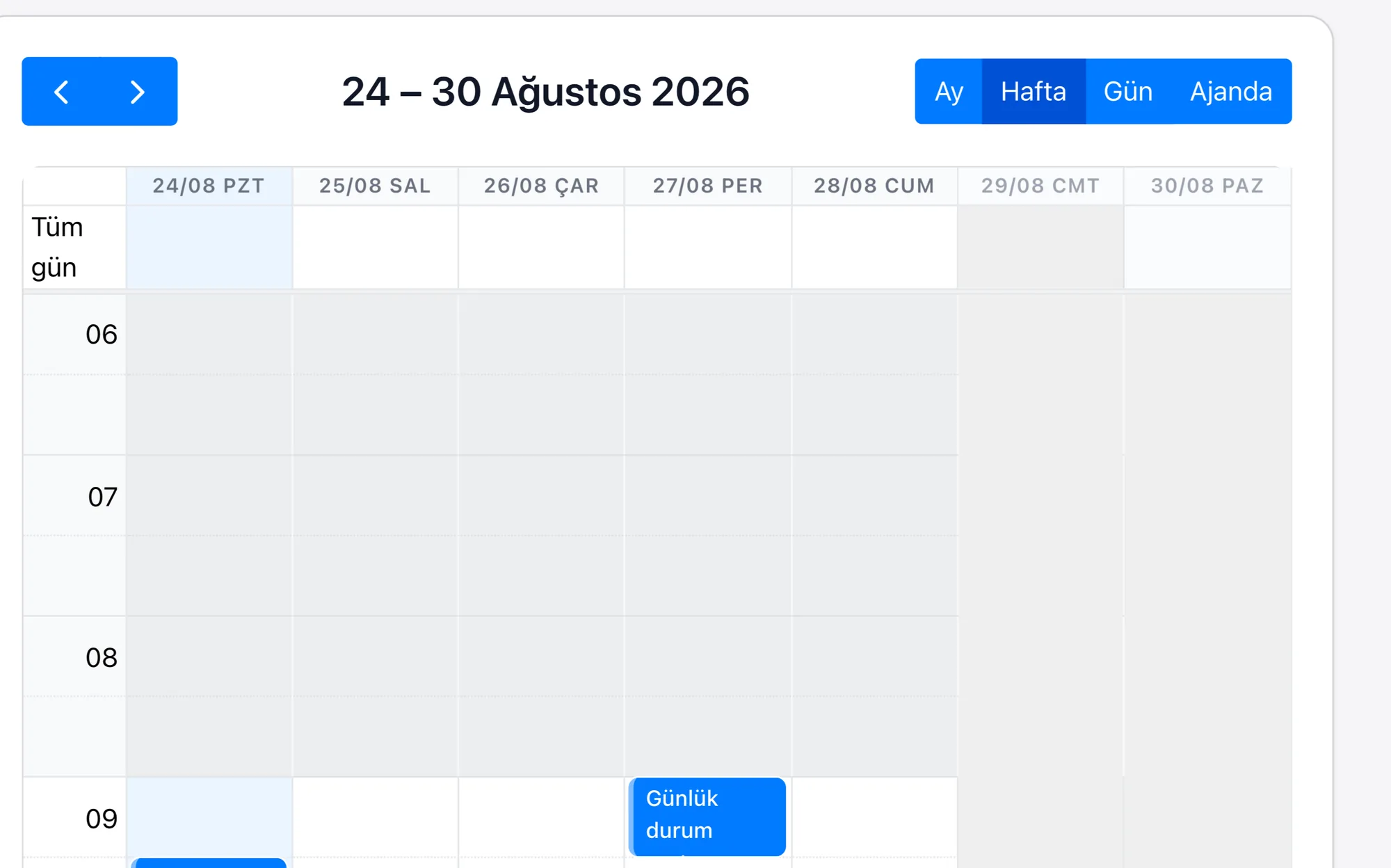
- Run the pre-operative preparation, the surgery day and the post-operative check-up calendar for bariatric surgery in a single flow
- Have a psychologist session suggested for emotional eating and adherence problems, and keep the session history on the patient card
- Organise post-operative periodic check-ups, vitamin and mineral levels and protein intake tracking spread over the years
| Weight And Measurement Tracking | Weight, BMI, waist circumference and body fat ratio are written with a date onto the patient record at every check-up appointment; the monthly and yearly trend is read from the chart of those lines. |
|---|---|
| Diet And Exercise Plan | The nutrition programme is a record linked to the patient record; the plan written by the dietitian and the daily calories the patient enters from the mobile app sit on the same card, and the doctor sees them from the same place. |
| Bariatric Surgery Process | The diet period, the tests, the anaesthesia assessment, giving up smoking and insurance approval are prerequisite tasks linked to the surgery record; an unclosed task is visible on the record. |
| Psychological Support | A psychologist session is an activity linked to the patient record; the session date and note are in its fields, and patients flagged with an adherence problem are listed according to that field. |
| Long-Term Post-Operative Follow-Up | Periodic check-ups are opened as tasks linked to the surgery date; vitamin and mineral levels and protein intake are fields on the record, and a patient who does not come stays on the list because the task is not closed. |
In bariatric surgery the operation date carries behind it a parallel preparation list running for several months: the diet period, endoscopy, anaesthesia assessment, giving up smoking, psychologist sessions and SGK or private insurance approval. When these items are tracked separately, one of them is left incomplete and the date slips at the last moment; and a slipped date disrupts both the operating theatre plan and the patient's preparation discipline.
Rapitek CRM runs these prerequisites on a single patient's record and keeps the dietitian's, the doctor's and the psychologist's notes in shared visibility. Because the post-operative check-up calendar is born from the record itself, when a patient does not come it does not stay as a gap — it lands as an alert for the clinic manager.
