
Skip to content

Footwear CRM

In footwear an order is not a quantity but a size run: while size 38 of a model sells out, size 44 waits on the shelf, and the dealer only wants the size that is moving. When pre-orders are written on paper and in-season demand is taken over the phone, how many pairs of which size go into production is decided by guesswork.

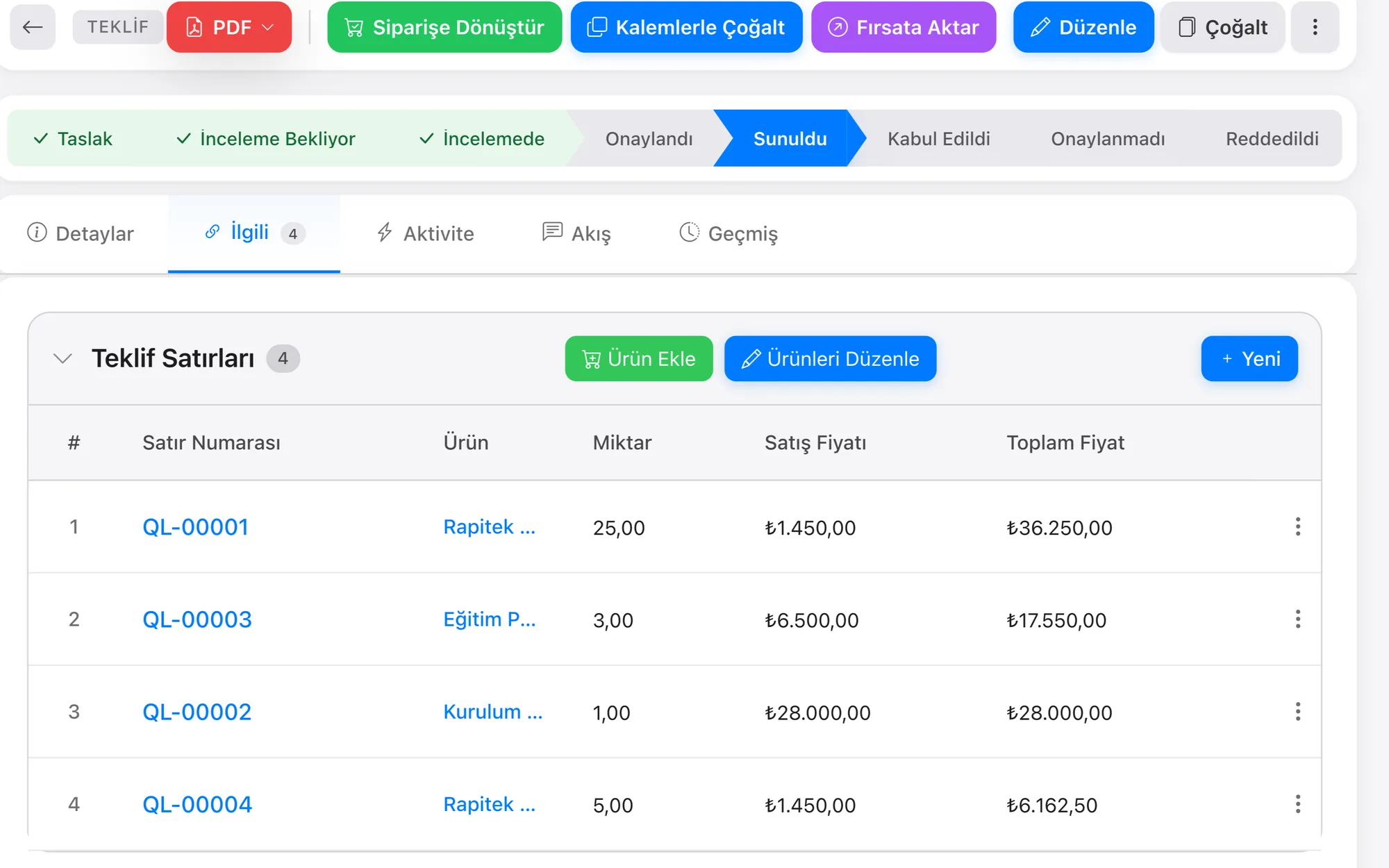
An order line carries a model and a size field; a model's size spread is read from those lines. In Rapitek CRM a warranty case opens with a defect type and recurring defects gather in a list.
Footwear CRM

What we set up, and how

  • Record dealer pre-orders with a model and size run breakdown and look at the production plan from the same list
  • Record in-season demand as a separate type from the pre-order and see in the report which size sells out early
  • Open warranty and return cases with a defect type; have the resolution note written on the case, so later cases opened with the same defect type are read from those records
  • Tie subcontracting workshop work to a task with its deadline date, and have the person taking delivery sign on the signature screen in the mobile app
Size RunAn order line carries a model and a size field; a model's size distribution and the difference from dealer to dealer are read from those lines.
Pre-Order and In-Season DemandBoth are order records linked to the same account; the type is separated in a field, and the season report is split in two by that field.
Warranty Case and Defect TypeA warranty case is a record; the model, the defect type and the decision given are its fields. The resolution note is written on the case, and later cases opened with the same defect type are read from those records.
Subcontracting Workshop DeadlineWork given to a workshop is a task; the deadline date and the quantity are its fields, and as the deadline approaches the task moves up the list.

In the footwear business two separate calendars run at once: the collection pre-order is collected months before the season, while in-season demand comes only for the models that are working and only in certain sizes. When the pre-order is on paper, in-season demand on the phone and warranty complaints such as a sole coming away in a separate ledger, which model is really selling and which model is coming back are never seen side by side.

Rapitek CRM keeps the dealer as an account record; the pre-order and in-season demand accumulate under the same account with a model and size breakdown. Because the warranty case is a separate record, which defect recurs on which model is read from the history; the resolution note is written on the case, and later cases opened with the same defect type are read from those records. Because work given to a subcontracting workshop is tracked as a task, jobs whose deadline is approaching drop into the list by themselves.

The scope of the plans and the items priced separately are set out on the pricing page.

Frequently asked questions

Can I keep the size run on the order?
Yes. An order line carries a model and a size field; the size distribution of the same model is read from the lines, and the dealer-level size run report comes out of that breakdown.
Can I see a defect recurring on the same model across warranty cases?
On the case record the model and the defect type are each a field; the model-level list shows how many times a defect has recurred. The resolution note is written on the case, and later cases opened with the same defect type are read from those records.
Will I know when the deadline for work given to a subcontracting workshop is approaching?
Work given to a workshop is a task; the deadline date and the quantity are its fields, and as the deadline approaches the task moves up the list. A handover record is opened at delivery and the person taking delivery signs on the signature screen in the mobile app.
Which is the best CRM software for footwear?
When choosing a CRM for the footwear sector you should look at sector workflows, integration capabilities, customisation options and the quality of support. You do not set up Rapitek CRM — we do: we configure the fields, the stages and the reports around your process in the footwear sector, we migrate your data, and we deliver the training for your team in Turkish. Before building our own platform, our team completed more than 200 enterprise CRM projects during its Salesforce years; we do the setup with that experience.
How much does a footwear CRM system cost?
There are three tiers and all of them are priced per user per month: Sales 39 USD, Platform 69 USD, and Enterprise from 119 USD. Prices are based on annual billing; Sales and Platform require a minimum of 5 users, Enterprise a minimum of 10. For teams under 5 there is a separate starting point: Inbox, at 149 USD per company per month. The scope of setup, data migration and training is not the same on every project; the scope and the setup fee, if any, are worked out together in the discovery call and shared with you in writing. Rapi artificial intelligence credit and ERP integration are separately priced items.
How are CRM integrations done in the footwear sector?
If you use Logo, Netsis, Mikro or SAP, your CRM talks to it — we build the connection ourselves. There is no out-of-the-box module: because access and field structure on the ERP side differ from one installation to the next, a single button does not work the same way everywhere. The connection is built specifically for the project via our REST API covering 183 business objects, OAuth2, webhooks and import/export. We work out the scope and the cost in the discovery call and share them with you in writing.
How does the move to a CRM system work in the footwear sector?
We start with a discovery call: together we work out your process in the footwear sector, which fields and which stages are needed. After the call we give you a date, not a range. We migrate your data ourselves, and we deliver the training for your team in Turkish. There is no call centre on our support line. Your question is answered by the team that builds and develops the product — this is a choice, not a matter of capacity.
Can a mobile CRM be used for footwear?
In footwear, subcontracting workshop work is a task with a deadline date; the person taking delivery signs on the signature screen in the mobile app. The app is live on both the App Store and Google Play. The web interface also works on tablets and phones. The app does not work offline; if the connection drops while you are filling in a form, what you have written is kept on the device for 24 hours.
Made with RapitekGO

We would like to use optional cookies to measure your visit. The site works exactly the same if you decline. Cookie policy