
Graphic Design CRM
For the same job the brief sits in e-mail, the amendment request in WhatsApp and the quote in a separate file; when the client says “like we discussed the other day”, nobody can work out which conversation is meant.
Every amendment request drops under the project with its version, and which round of revisions you are on is counted. The hours the designer logs sit beside the quote amount on the same card.
- Keep the brief, the delivery date and the approval status of every job on a single project record
- Record amendment requests, keep the version history, and follow how much of the agreed revision allowance has been used
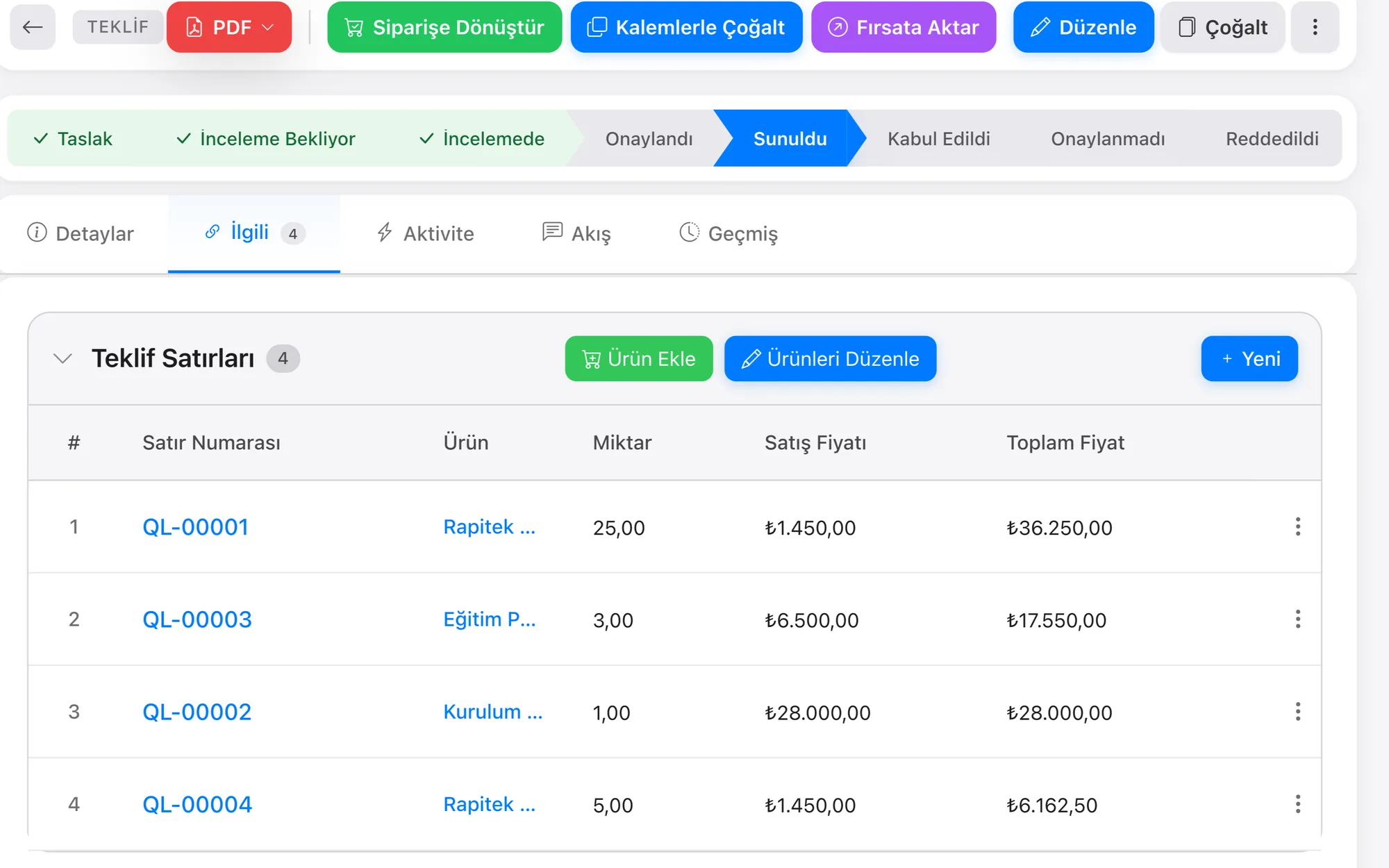
- Prepare the quote per project; record client approval as a stage change and transfer it to an invoice with a ready-made conversion action
- Keep client correspondence, meeting notes and design files in the same place
- Communicate quickly and share files over WhatsApp, with the whole exchange staying in the CRM
| Project and Brief Management | A job is a project record; the brief, the delivery date and the approval status sit in its fields, and files are attached to the same card. |
|---|---|
| Revision Tracking | Every revision request is a separate record tied to the project; which round of revisions it is gets counted, and going over the agreed number shows up on a list. |
| Quoting and Invoicing | The quote is produced under the project with its line items; approval is recorded as a stage change, and the transfer to an invoice is done with a ready-made record action. |
| Client Communication History | Correspondence, meeting notes and files accumulate under the client card; the question of who promised what is answered from a single record. |
| Designer Hours Breakdown | The hours a designer logs against a job sit line by line under the project; because the quote amount and the total of those lines come side by side on the same card, the profit on the job is visible before the project closes. |
In design, cost keeps rising even after the file has been delivered. The client says “just a small touch here”, the designer does it, and the next day another one arrives; because the number of revisions written into the contract sits in front of nobody's eyes, everything past a certain point turns into unpaid overtime. Approval carries the same blur: if there is no written record of which version was accepted, the file that goes to print and the file in the client's mind can turn out to be different.
In Rapitek CRM every amendment request that comes in drops under the project together with its version; which round of revisions you are on and which file was approved are read from the record. Because price, work and invoice stay in the same place, the time spent on a job comes to sit beside its revenue; which client actually makes you money is visible before the project ends. The agency-specific configuration is done by us, not by you; after the discovery call we give you a date, not a range.
