
Legal CRM
When hearing dates sit in one person's diary and case documents in scattered folders, only the lawyer following that file knows where anything in the office stands.
Every case file is a record attached to the client; the hearing date is a field on it. Time worked is a line attached to the file and activity, and draft invoice items come out of those lines.
- Collect every file on a single record together with its documents and process steps
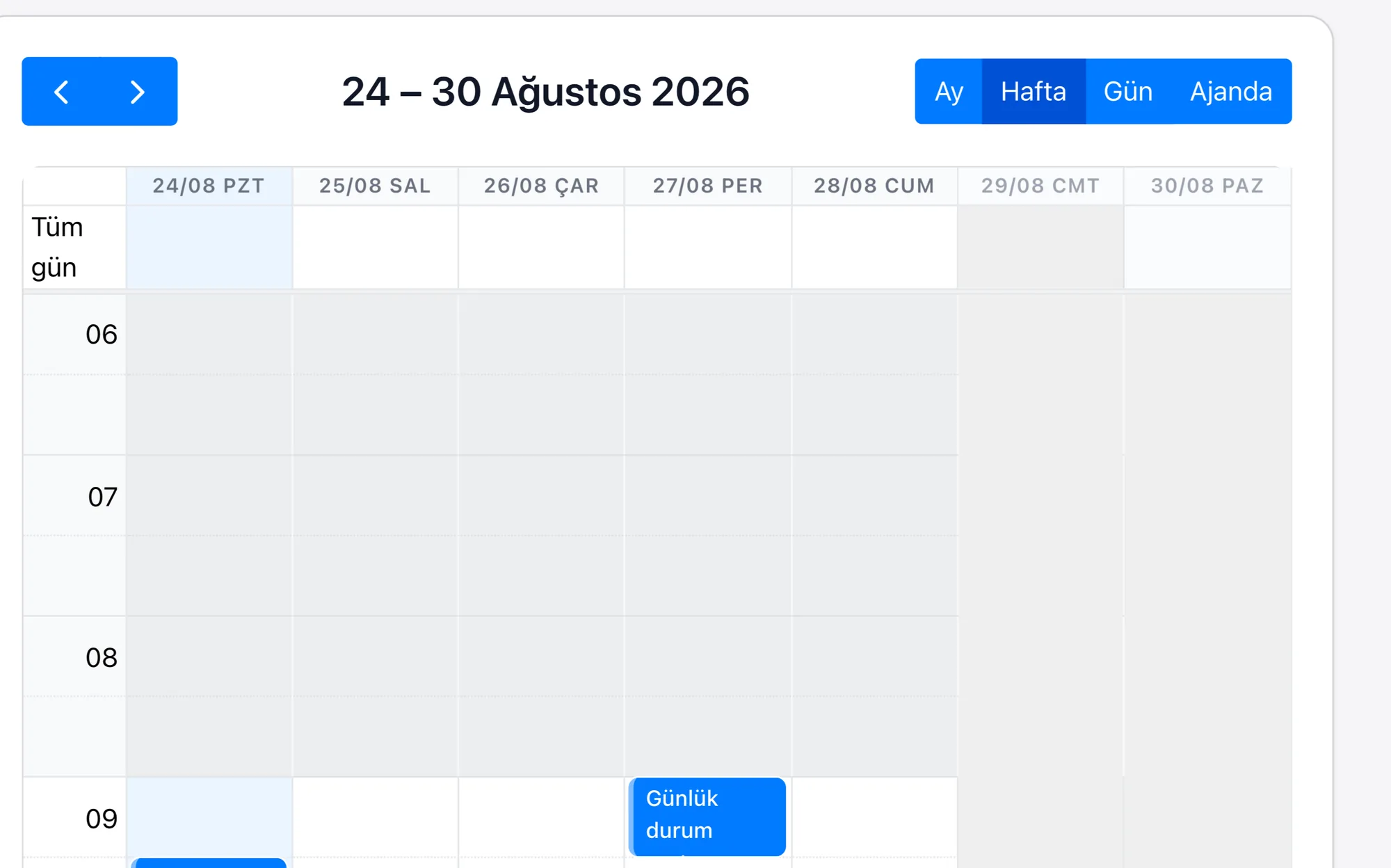
- Keep the hearing date in a field on the file; let upcoming ones appear on the shared calendar and on a list, and tie the reminder to that date with a rule
- Record your working time line by line on a file and activity basis; build the draft invoice items from those lines
- Send the client a notification when the file's stage changes, and keep every piece of information sent under the file
- Connect a single WhatsApp number to the team's shared inbox, with conversations assigned according to the rule you define
| Case File Record | Every case file is a record attached to the client; the case number, the court and the stage are in fields on that record, and the documents sit as attachments to the same record. |
|---|---|
| Hearing Calendar | The hearing date is a date field on the file; upcoming hearings appear on the shared calendar and on a list, and the reminder is tied to that date. |
| Time Record | Time worked is a line attached to the file and the activity; if an hourly rate is defined, the draft invoice items are built from the total of those lines. |
| Client Notification | The file's stage is a field; when the stage changes, the notification that goes to the client is tied to that field during setup, and every piece of information sent leaves a trace under the file. |
| Power of Attorney and Authority Record | The power of attorney taken from the client is a record attached to the file; its scope, the date it was drawn up and which files it was used in sit in fields, and a dismissal or a withdrawal leaves a trace with its date on the same record. |
In a law office the resource that leaks the most is time: a ten-minute call with a client, reading the other side's petition, assessing an interim decision - none of it is recorded at the moment it happens, and at the end of the month nobody remembers how many hours went to which file. The second leak is the question "what is the state of my case"; the answer is simple, but every time it interrupts a lawyer's work.
In Rapitek CRM the time record is attached to the file and the activity, and if your hourly rate is defined, the draft invoice items are built directly from the total of those lines. Because which stage the file is at is a field on the record, the answer to the status question is given without waiting for the lawyer following the file; and when the stage changes, the notification that goes to the client is tied to that field too. Because the team's correspondence runs over a single business number, when staff change the history stays with the office, not on a personal phone.
