
LegalTech CRM
In LegalTech the longest step of the sale is not showing the product, but the other side's privacy and data processing review. When that review runs on e-mail attachments, nobody's screen shows which question is waiting with whom, or why the pilot has stretched.
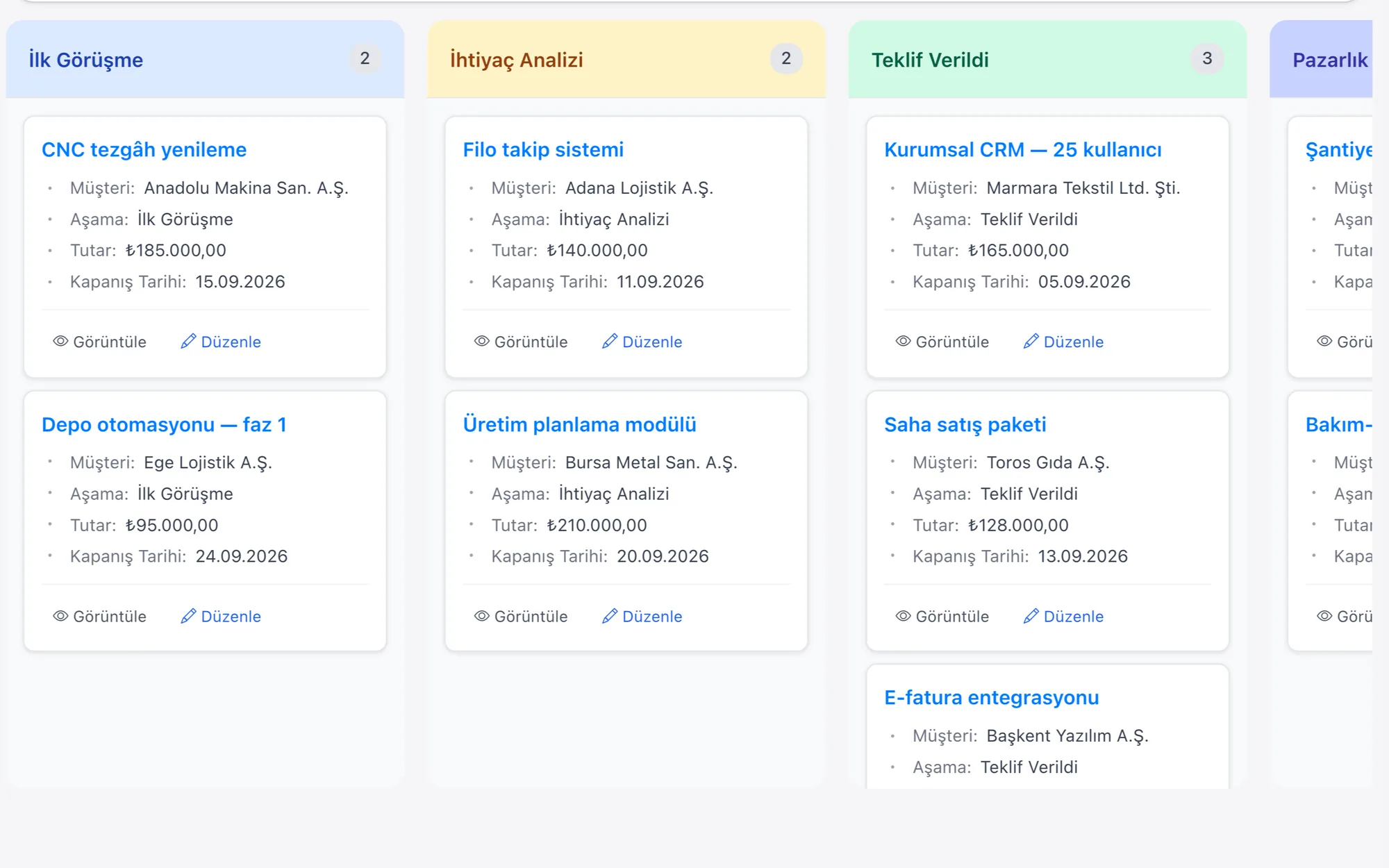
The pilot is an opportunity record with its own stages; duration, user count and objections are its fields. The privacy review sits in the same record as a separate approval step.
What we set up, and how
- Collect demo requests in a single queue and drop them to the relevant sales owner through the assignment rule defined during setup
- Run the pilot in a record with its own stages; keep the duration, the user count and the objections raised on the same card
- Define the privacy and data processing review as a separate approval step and track which clause it is waiting on
- Keep the firm's lawyer and licence counts in account fields and open the renewal task tied to the contract end date in advance
| Firm and Legal Department Account | The buyer is an account record; the number of lawyers, the licence count and the contract end date are its fields, and the renewal amount is calculated from them. |
|---|---|
| Pilot Management | The pilot is an opportunity record with its own stages; the start and end date, the number of pilot users and the objections sit on the same card. |
| Privacy and Data Processing Review | The review is an approval step; its owner and the pending clause are fields, and the document sent stays attached to the record. |
| Post-Demo Contact Tasks | Contacts after a demo request are opened as tasks; each step's date and owner are its fields, and when a reply arrives the remaining tasks are closed and the record falls to its owner. |
When you sell software to a law firm or a corporate legal department, the decision does not sit with one person: the managing partner likes the product, junior lawyers try the day-to-day use, and someone else entirely reviews the contract and the data processing terms. Once the pilot has started, how many users actually logged in sits on the product side, the objections sit in e-mail, and the latest version of the contract to be signed sits on someone's desktop. When the renewal period arrives, the fact that the firm's number of lawyers has changed is noticed while the invoice is being issued.
In Rapitek CRM the firm is an account record; the number of lawyers, the licence count and the contract end date sit in that record's fields. The pilot is an opportunity record with its own stages: the start and end date, the number of pilot users and the objections raised are tracked on the same card. The privacy and data processing review is a separate approval step; who is waiting on which clause is read from the record. There is no out-of-the-box module for carrying product-side usage data into the CRM; we build the connection: it is set up specifically for your project over our REST API that reads and writes CRM records, along with webhooks.
The scope of the plans and the separately priced items are written on the pricing page.
