
Paper CRM
In paper a quote is given not to a product but to a specification: its grade, its weight, its size, reel or sheet. Because the price moves along with the raw material and the exchange rate, a quote given yesterday may not hold today, but the customer still treats it as valid.
A quote line carries fields for grade, weight, size and reel or sheet; the validity date is a field on the quote, and those that have expired gather in a separate list.
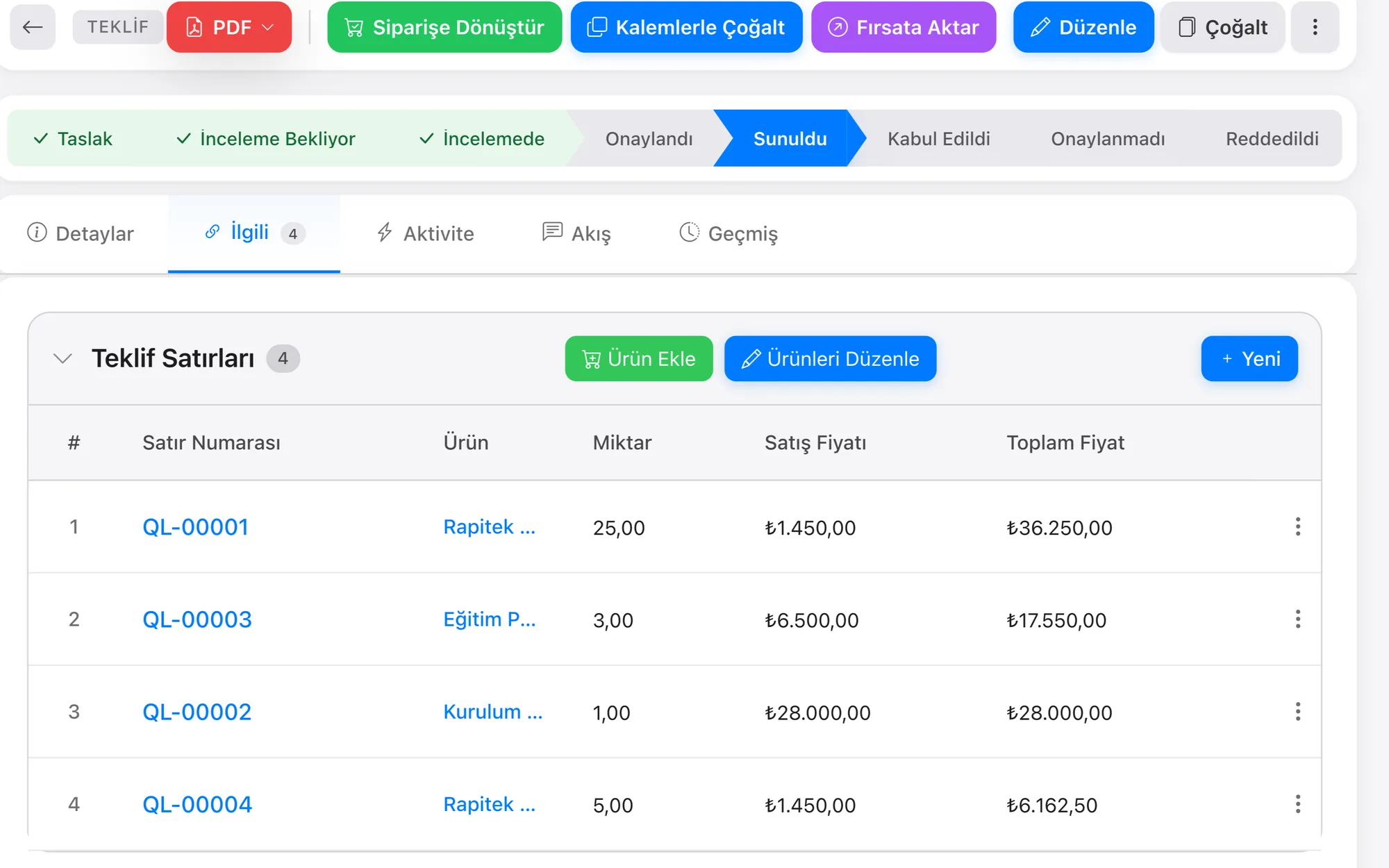
- Prepare the quote with grade, weight, size and reel-or-sheet lines, and carry the same lines from a past order into a new quote
- Keep the quote validity date in a field, separate expired quotes out of the list and reprice them
- See from the record which customer a batch in stock has been promised to, and do not commit the same batch twice
- Read the repeat buying interval from the customer's history and open a follow-up task, attaching shipment and delivery note details to the order
| Specification-Based Quote | A quote line is more than a product; the grade, the weight, the size and whether it is reel or sheet sit in the line's fields. |
|---|---|
| Price Validity | The validity date is a field on the quote; quotes past their date gather in a separate list, and the repricing task is opened from there. |
| Batch Allocation | A stock batch is a record; which order it is attached to is seen from that record, and the unattached quantity stays free. |
| Buying Rhythm | The customer's order history sits on their own record; when the interval lengthens, a follow-up task drops into the list and is assigned to a representative. |
In paper sales two things move at once: the specification the customer wants and the cost of that specification. When a printer says "the same paper", they mean the weight and the size from last time; when that detail stays inside an old quote e-mail, the wrong size is cut on the new order and the cost of the return stays with the seller. At the same time a batch in stock may have been promised to two different customers; both come to light on the loading day.
Rapitek CRM keeps the quote together with its specification lines, and because the validity date sits in a field on the quote, expired quotes separate out on the list. Since every customer's past orders build up on their own record, "last time" is not a memory but a line. The rhythm of repeat buying is read from that same history; a follow-up task is opened for a customer who buys at a set interval and the representative calls before the stock runs out.
The scope of the plans and the separately priced items are written on the pricing page.
