
Physiotherapy CRM
When which session is covered by insurance, how much has been collected from the patient and how the picture at the start of treatment compares with today are left in separate notebooks, producing a single report takes days.
The total sessions on the doctor's report and its validity date are fields on the patient record; each session is deducted from that number and a renewal task opens before it runs out.
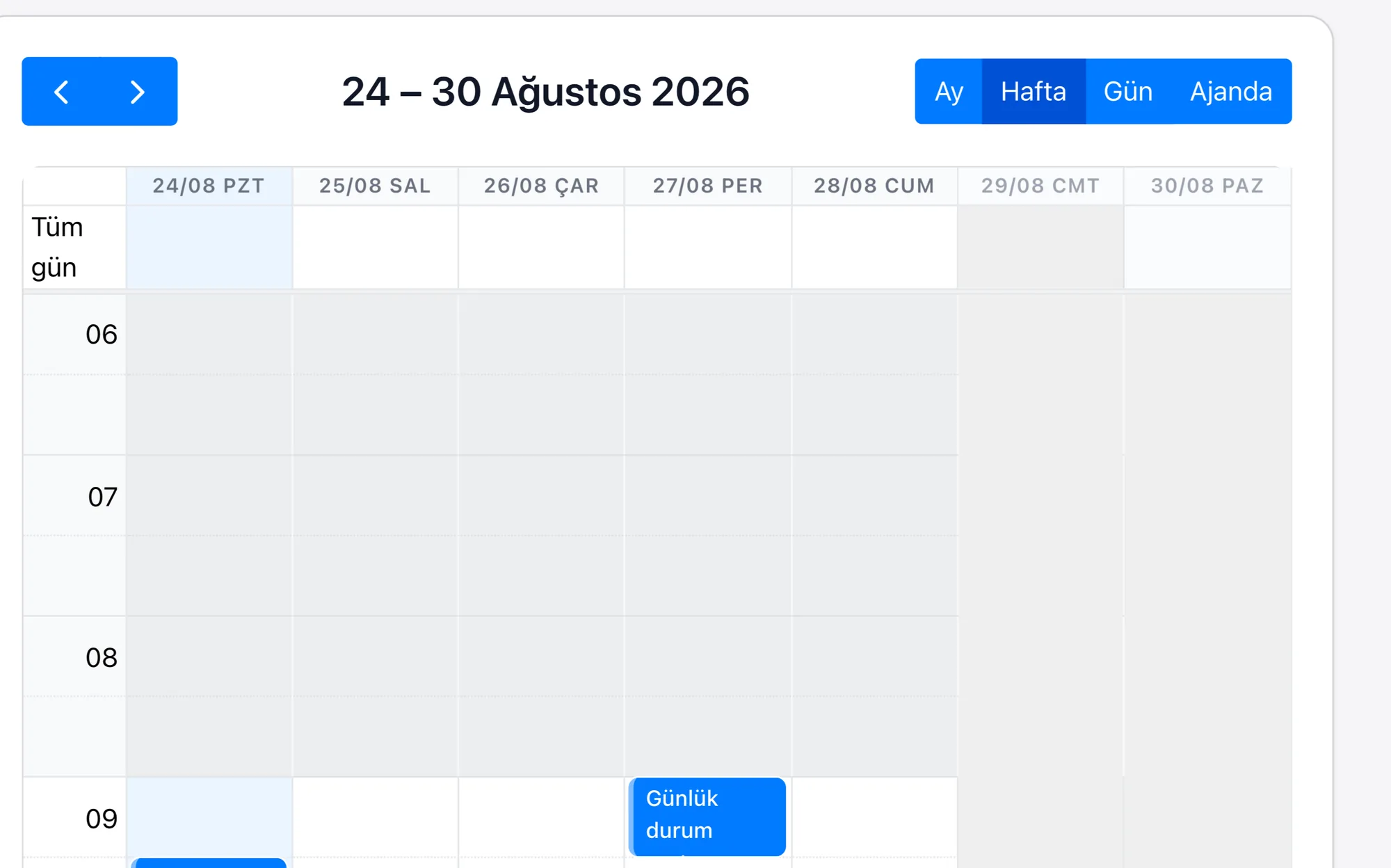
- Run online booking, reminders and recurring session planning on a single calendar
- Create a treatment plan for every patient and record the session progress step by step
- Enter SGK and private insurance provision details on the record and follow patient payments from that same record
- Produce comparative progress reports from before and after treatment
- Send appointment reminders and home exercise programmes over WhatsApp
| Patient Appointment Management | An appointment is a record with fields for the patient, the therapist and the time; recurring sessions are opened as a series, and the reminder is tied to the date. |
|---|---|
| Treatment Programme Tracking | The treatment plan is a record attached to the patient card; the note from each session builds up under it, and which step has been reached is visible on the card. |
| Insurance and Payment Tracking | The payment and provision details are fields on the session record; the remaining balance is totalled on the patient card and the statements are taken from the report. There is no out-of-the-box module for SGK and insurance companies — these fields are filled in by hand or with an import file. |
| Patient Progress Reports | Because measurements build up as dated fields, the before-and-after comparison is produced from those same records and no separate file is kept. |
| Referral Report and Session Entitlement | The total number of sessions written on the doctor's report and the report's validity date are fields on the patient record; every session performed is deducted from that number, and a renewal task is opened before the entitlement runs out or the date expires. |
In a physiotherapy centre the day is limited by the therapist's capacity: the number of sessions a physiotherapist can take in a day is fixed, and once that number is full a new patient can only be booked with another therapist or on another day. When therapist schedules are kept separately, nobody holds the centre's real free capacity; some therapists wait with nothing to do while some patients are given an appointment weeks away.
Rapitek CRM gathers all the physiotherapists' schedules and patient loads on a single panel, and attaches the session record to the treatment plan. Non-attendance and whether the home exercise programme was sent are then read in the same place; patient records are kept in a database dedicated to each customer, TLS 1.3 is used in transit and access is limited by role-based authorisation. On the insurance side we build the connection ourselves; there is no out-of-the-box module. As long as no connection is built, the provision and policy details are entered on the record by hand or with an import file, and if a connection is wanted it is built over a REST API within the scope of the project.
