
Metal Industry CRM
A request reaches a metal-working firm as a cutting list or a technical drawing; the price is discussed by the kilo and the order by the piece. When the same customer says six months later "one more of the last job", nobody holds which grade that calculation was made with, or with what scrap allowance.
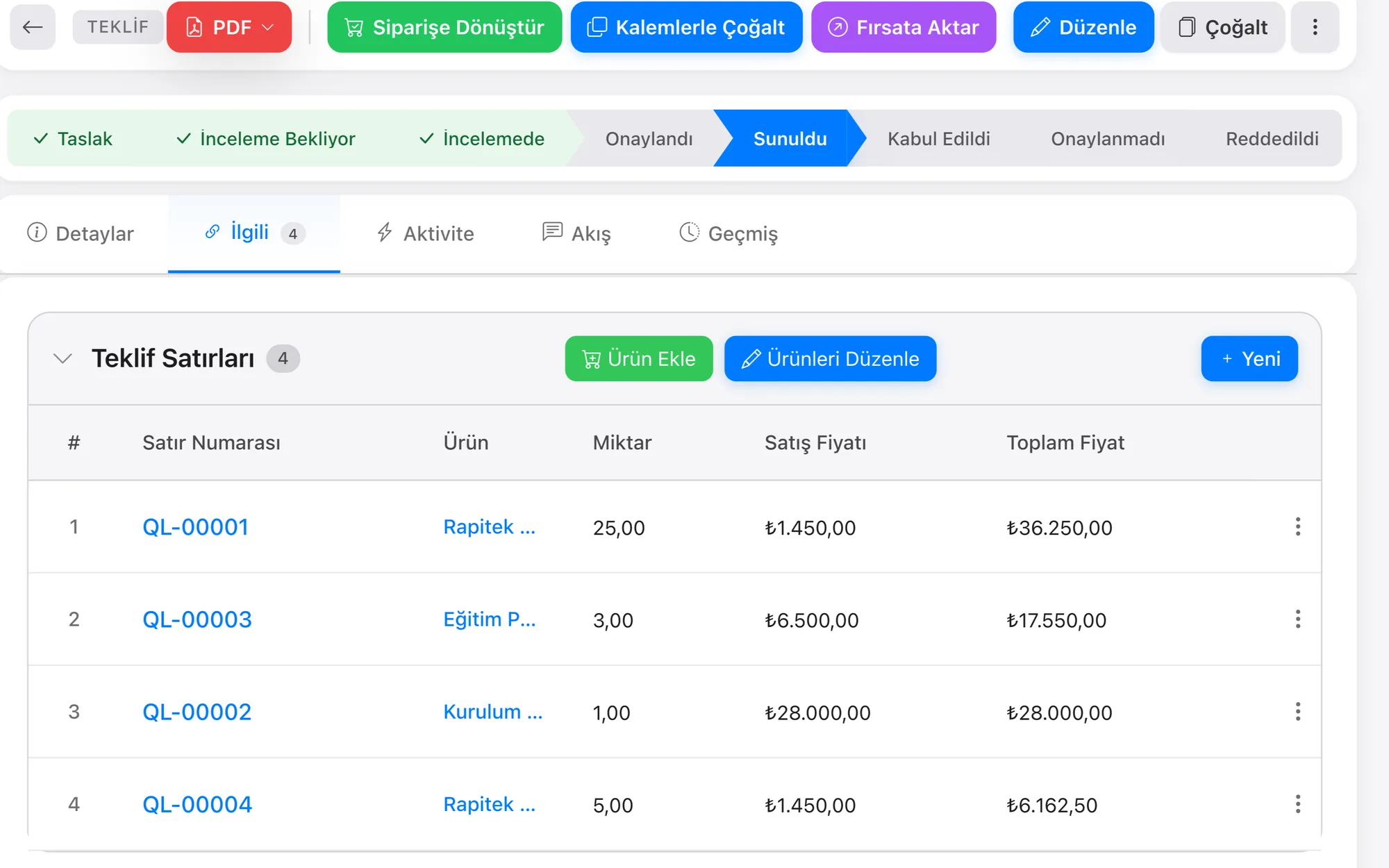
Material and labour are separate quote lines; which grade was priced at what sits on the line. When the same part is asked for again, the old quote is opened and the unit price updated.
What we set up, and how
- Record the request with the material type, the grade and the cutting list; split the quote into material and labour lines and have the total calculated from the line items
- On a repeat order of the same part, open the previous quote from the record and update only the unit price that has changed
- Track subcontract work such as cutting, bending and welding as stages of the job record, and see from the list which job is waiting at the machine
- Keep the scrap and remnant length record per job and price the next quote on actual consumption
| Request with a Cutting List | The request is a record; the material type, the grade and the thickness are its fields, and the cutting list sits as an attachment on the same record. |
|---|---|
| Line-Item Quote | Material and labour are separate lines on the quote; the unit price comes from the product record, and the total and the margin are calculated from those lines. |
| Repeat Order of the Same Part | The previous quote sits under the customer card; when the same part is asked for again, the record is copied, the cutting list and the labour lines come across as they are, and only the material unit price is updated. |
| Scrap and Remnant Length | The scrap rate is a field on the job record; when that field of closed jobs is reported, the scrap allowance in the next quote comes from the record rather than from an estimate. |
In metal work a quote is not a single figure: the material price per kilo, the grade difference, the cutting and bending labour, the remnant length and the scrap allowance are each calculated separately. That calculation stays in the spreadsheet of the person who prepared the quote; when that person is on leave, or when the same job comes back, the calculation is done again from scratch and the difference between the two quotes cannot be explained to the customer.
Because Rapitek CRM keeps the quote with line items, material and labour appear separately and which grade was priced at what sits in the record. When the same customer asks for the same part again, the old quote is opened from the record and only the unit price that has changed is updated; so on repeat jobs the price rests on the previous record rather than on a remembered figure.
The scope of the plans and the separately priced items are written on the pricing page.
