
Wind Energy CRM
To build a site in a wind project, dozens of plot owners are spoken to one by one; every conversation is a separate relationship, and most of them stay in the memory of the person running the work. Nor does the job end once the site goes into operation: every turbine starts living with its own maintenance calendar.
Every plot owner is a contact record; the meeting note, the price offered and the stage reached accumulate on it. The lease's end date is a field, and those approaching appear in a list.
What we set up, and how
- Keep every plot owner in a separate contact record, write in the meeting note and the stage reached, and run the site as the project those records are linked to
- Track the start and end dates of lease and easement agreements as fields, bring those whose term is approaching onto a list and open a task
- Keep every turbine in an equipment record, and link the planned maintenance interval and the fault history to that record
- Plan the field team's maintenance visit as a task, and take the closure from the mobile app with location verification
| Land Owner Record | Every plot owner is a contact record; the meeting note, the price offered and the stage reached accumulate in the fields of that record. |
|---|---|
| Contract Dates | The start and end dates of the lease and easement agreements are each a field; those whose term is approaching appear in a list, and the renewal task is opened from there. |
| Turbine Equipment Record | Every turbine is an equipment record; the planned maintenance interval and the fault history are written onto that record with their dates. |
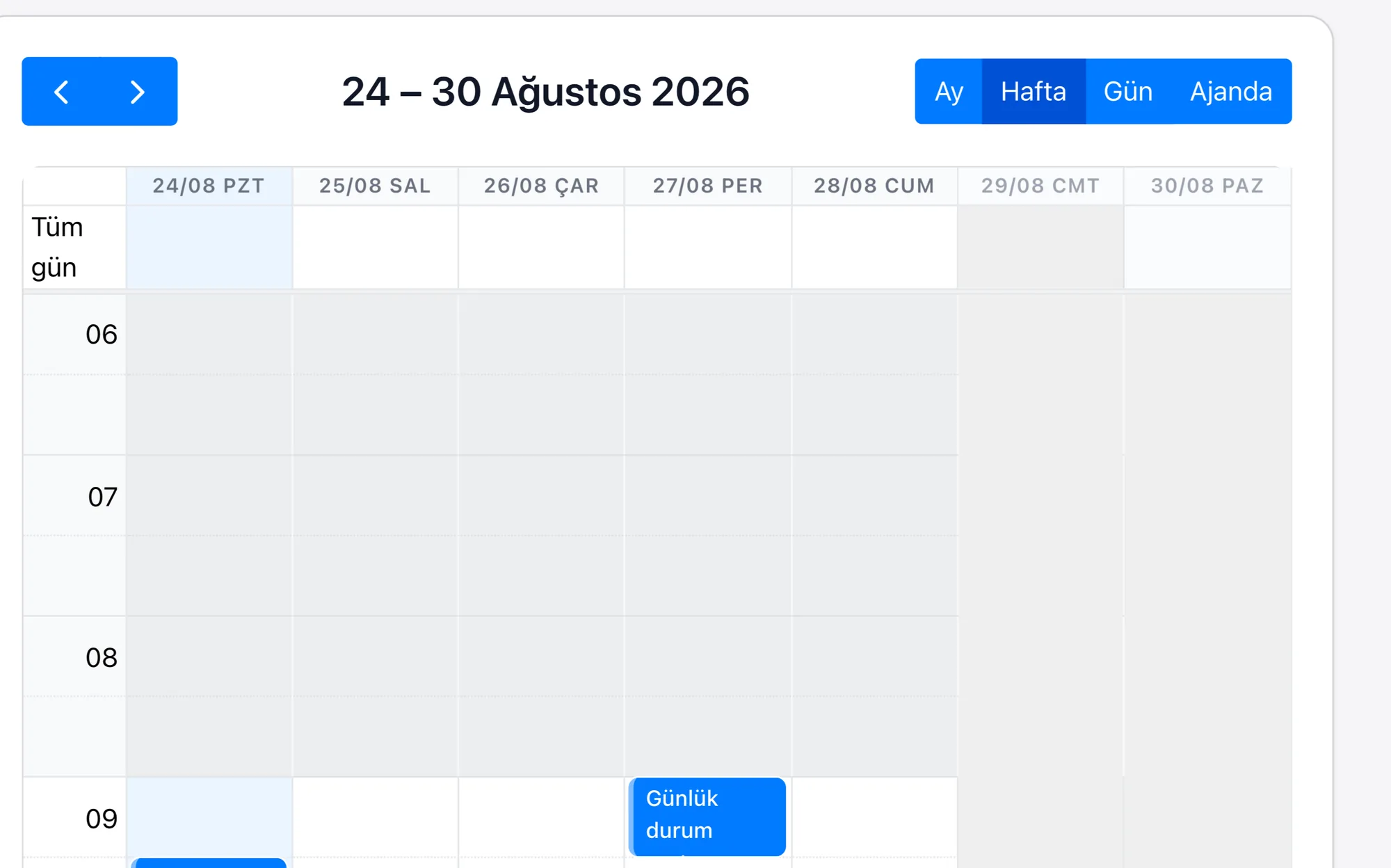
| Turbine Maintenance Round | A maintenance round is a task; which turbine, which team and which date sit in its fields; the team closes the job at the foot of the tower from the mobile app, the location is verified, and a fake location report is detected. |
The most exhausting side of developing a wind site is not technical but relational: a met mast is put up, data is collected over a long period, and during that time the owners of the plots on the site are spoken to one by one. Who has agreed, who is waiting on a price, whose heirs need to be talked to. All of this sits in a spreadsheet and in the memory of the person running the work; when that person leaves, the conversations start again from the beginning. The renewal dates of the lease and easement agreements are in the same place, and they are remembered when the term has already expired. Once the site goes into operation the ledger changes: the periodic maintenance of every turbine, its fault history, and where the field team was and when, are all kept in separate places.
In Rapitek CRM every plot owner is a contact record; the meeting notes, the price offered and the stage reached accumulate on that record, and the site is the project record those records are linked to. Because the start and end dates of the lease and easement agreements are each a field, those whose term is approaching appear in a list of their own accord and a task is opened for the person responsible. On the operations side every turbine is an equipment record; the planned maintenance interval and the fault history are written onto that record, and maintenance is assigned to the team as a task. The field team's visit is closed from the mobile app with location verification, and a fake location report is detected.
The scope of the plans and the separately priced items are written on the pricing page.
