
Advertising CRM
The companies working in advertising differ in kind (agency, media owner, production, print) but they all work to the same campaign calendar. A delay in one link shows up not at that company but on the day the campaign is due to go live.
A campaign is a record with start and end date fields; production, print and broadcast are tasks that sit under it, each with its own delivery date.
What we set up, and how
- Turn the campaign into a single record with a start and an end date and track the broadcast period from that record
- Plan the production, print and broadcast steps as separate tasks under the campaign, each with its own delivery date
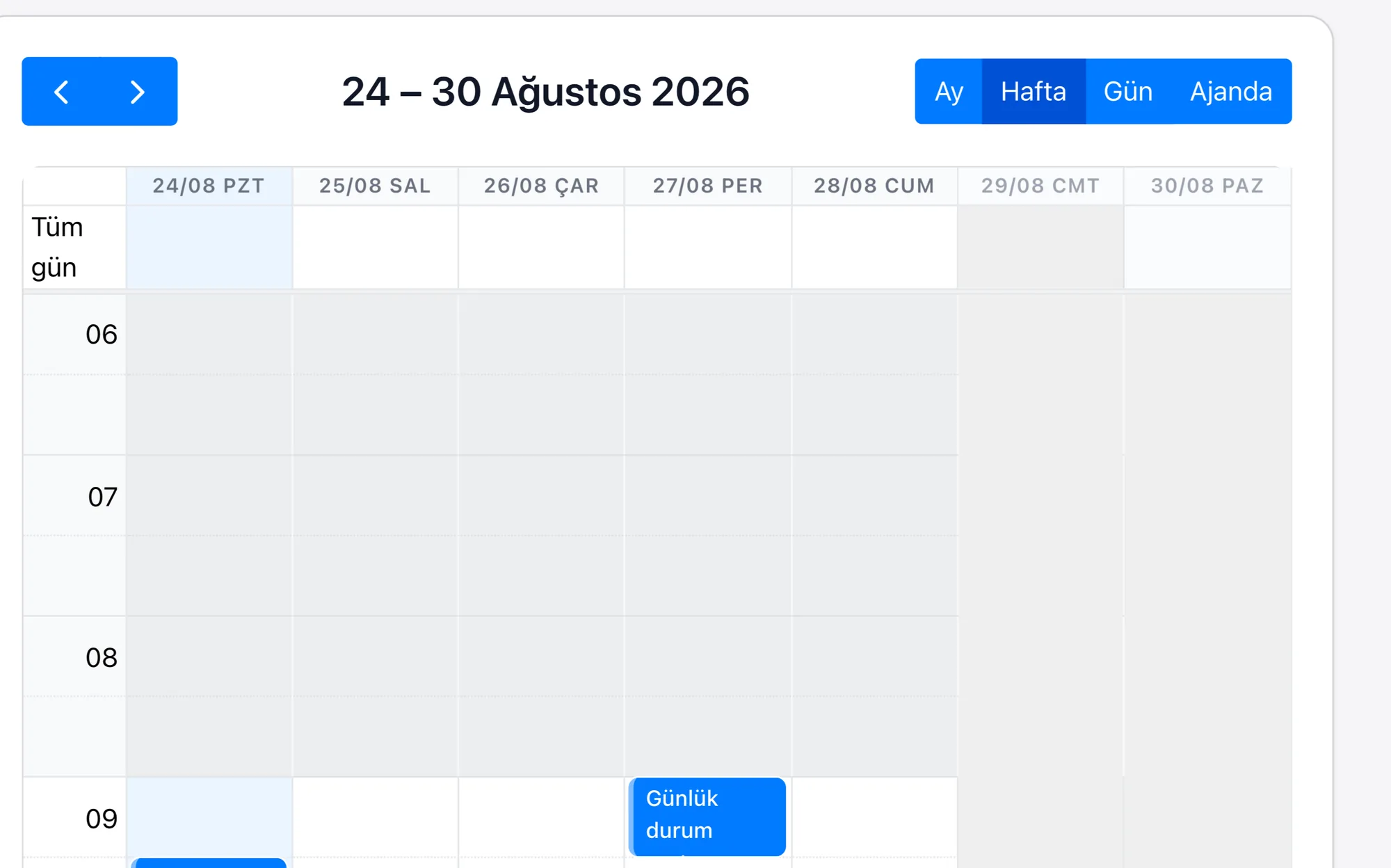
- See the jobs falling in the same period in the calendar and read how full that period is before accepting a new job
- Keep the advertiser and the supplier in separate account records and attach the sold and the bought side to the same campaign
| Campaign Period | A campaign is a record with start and end date fields; which job belongs to which range is read from those fields. |
|---|---|
| Chain Steps | Production, print and broadcast are each a task; each sits under the campaign record with its own delivery date and owner. |
| Period Load | Tasks are gathered in the calendar by their date field; the number of jobs falling in a range is visible from the list, and the decision to accept is made by looking at it. |
| Advertiser and Supplier | Both are account records; because they are attached to the same campaign, the sold side and the bought side of the work are tracked from a single record. |
What is sold in advertising is a date range more than a product: the campaign starts on this day and ends on that one. Every link in the chain plans its own work around that range; agency approval, the production shoot, print delivery and media broadcast line up one after another. When the links are tracked in separate notebooks, a one-day slip is noticed only at the next link. Something similar happens on the media side: that the same period has been promised to two customers is understood when the calendar clashes.
In Rapitek CRM a campaign is a record with start and end date fields; the agency work, the production delivery, print and broadcast sit under that record as tasks with their own dates. Because the jobs that fall in the same period appear side by side in the calendar, how full that period already is can be read before a new job is accepted. The advertiser is an account record, and whichever link of the chain your company sits in, it runs its own stages under that account; because the supplier side is attached to the same campaign, both the sold face and the bought face of the work stay in one place.
What the plans cover and which items are priced separately are written on the pricing page.
