
PR Agency CRM
In a PR agency the capital sits with people, not with the firm: which journalist writes on which subject, when they were last spoken to, what they turned down. Because that knowledge lives in team members' own phone contacts, when someone leaves, the agency's most valuable asset leaves with them.
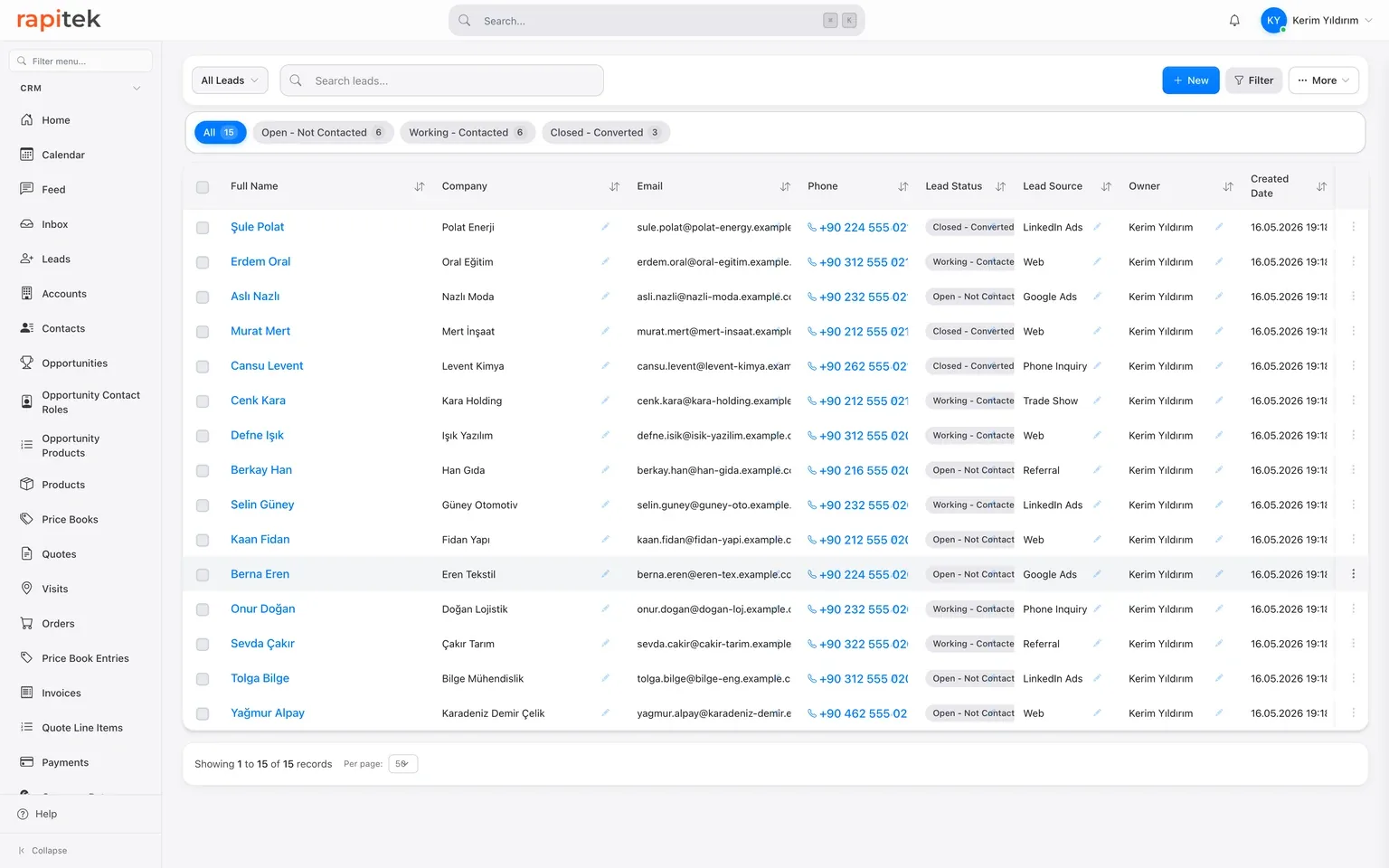
Journalists and editors are contact records; the subject they cover, the outlet they belong to and the last contact date sit in fields. Coverage is attached to the client and that contact.
What we set up, and how
- Keep journalists and editors on the record together with the subject they cover, the outlet they belong to and the last contact date
- Send the release not to a fixed list but to a list of contacts filtered by subject, and collect the replies under the contact
- Attach every published story to the client and to the contact approached, so the monthly coverage report comes out of the record
- Run launch and press conference invitations, attendance status and the follow-up tasks afterwards from a single record
| Media Contact Record | The journalist and the editor are each a contact record; the subject they cover, the outlet they belong to and the last contact date sit in fields, and the relationship stays with the firm. |
|---|---|
| Release Distribution | Distribution is a series of contacts made to a list of people filtered by subject; the send and the reply that comes back are written as activities under the contact. |
| Coverage Record | A published story is a record attached to the client and to the contact approached; the publication date and the link sit in its fields, and the monthly report is the list of these records. |
| Event and Invitation Tracking | A launch is an event record; the guests are contacts attached to it, and the attendance status and the follow-up task afterwards are run from the same record. |
In a PR agency sending out the release is the easy part of the job; the hard part is deciding who to send it to. The right person is the one who covers that subject and has written a similar story before; a release that goes to the wrong list does not merely come to nothing, it also closes the door on the next real story. But this relationship knowledge (who has written what, who should not be called and when, who came to which launch) lives in the memory of individuals rather than of the firm. The coverage report presented to the client at the end of the month is likewise made up of links collected by hand, and which contact turned into which story cannot be shown.
In Rapitek CRM the journalist, the editor and the content creator are each a contact record; the subject they cover, the outlet they belong to and the last contact date sit in their own fields. Distributing the release is a series of contacts made to a list filtered out of those records; the send and the reply that comes back accumulate under the contact. Because a published story is written as a coverage record attached to the relevant contact and to the client, the end-of-month report comes out of the record rather than out of memory. In a crisis, too, who the spokesperson is and which statement was made sit in one place.
What the plans cover and which items are priced separately are set out on the pricing page.
